Digital Administration for the Public Sector


Current State of Digitalization in Germany

The digitalization of public administration in Germany, despite intensive efforts under the Online Access Act (OZG) and register modernization, is still characterized by fragmentation, federal complexity, and heterogeneous IT system landscapes.

In particular, the municipal level is marked by a multitude of isolated solutions. Different specialized procedures, heterogeneous e-file systems, and historically evolved IT structures prevent efficient data exchange between authorities. For example, immigration offices, residents' registration offices, and passport offices within the same district are often unable to carry out direct data transfers because interface standards, security protocols, and data models are not harmonized.

Vision of a Unified and Compatible Solution for Public Administration:

In the context of register modernization and the introduction of data and contract management solutions, a unified digital ecosystem could be created with the following characteristics:

  1. Central Data Platform (District Cloud or Data Hub)
    • Each municipality uses the same technical platform for e-files, data management, and communication.
    • Interfaces are regulated via standardized APIs (e.g., OSCI, REST, XML).
    • Data storage is decentralized but follows a shared semantic model (e.g., based on XÖV standards).
  2. Standardized Specialized Software with Modular Structure
    • All municipalities within a district use the same core software (e.g., for registration services, immigration law, passport services).
    • Specialized procedures access shared core registers (e.g., personal, address, and business registers).
  3. Automated Data Flows with AI Support
    • Artificial intelligence handles tasks such as duplicate detection, data validation, and process routing (e.g., automatic forwarding of applications to the responsible authority).
    • Process automation (RPA – Robotic Process Automation) provides administrative support to employees.
  4. Central Procurement and Governance at District Level
    • Procurement is carried out centrally by the district to ensure uniform software standards, support, and training.
    • Quality and administrative control are managed by a higher-level digitalization unit within the district administration, which also oversees data protection, IT security, and training.
  5. Digital Signature and E-File as a Binding Working Basis
    • All documents and processes are managed digitally in a legally compliant and audit-proof manner.
    • Digital signatures (qualified in accordance with the eIDAS Regulation) ensure legal certainty.

Summary:
A unified, cross-district IT architecture for e-files and register modernization is a key step toward transparent and citizen-friendly public administration. Through shared software solutions, standardized interfaces, and centralized administrative governance, media discontinuities and interface problems can be sustainably avoided. The use of artificial intelligence (AI) for data validation and process automation actively supports public administration in its transformation into a digital authority.


Current State of Digitalization in Germany

The digitalization of public administration in Germany, despite intensive efforts under the Online Access Act (OZG) and register modernization, is still characterized by fragmentation, federal complexity, and heterogeneous IT system landscapes.

In particular, the municipal level is marked by a multitude of isolated solutions. Different specialized procedures, heterogeneous e-file systems, and historically evolved IT structures prevent efficient data exchange between authorities. For example, immigration offices, residents' registration offices, and passport offices within the same district are often unable to carry out direct data transfers because interface standards, security protocols, and data models are not harmonized.

Vision of a Unified and Compatible Solution for Public Administration:

In the context of register modernization and the introduction of data and contract management solutions, a unified digital ecosystem could be created with the following characteristics:

  1. Central Data Platform (District Cloud or Data Hub)
    • Each municipality uses the same technical platform for e-files, data management, and communication.
    • Interfaces are regulated via standardized APIs (e.g., OSCI, REST, XML).
    • Data storage is decentralized but follows a shared semantic model (e.g., based on XÖV standards).
  2. Standardized Specialized Software with Modular Structure
    • All municipalities within a district use the same core software (e.g., for registration services, immigration law, passport services).
    • Specialized procedures access shared core registers (e.g., personal, address, and business registers).
  3. Automated Data Flows with AI Support
    • Artificial intelligence handles tasks such as duplicate detection, data validation, and process routing (e.g., automatic forwarding of applications to the responsible authority).
    • Process automation (RPA – Robotic Process Automation) provides administrative support to employees.
  4. Central Procurement and Governance at District Level
    • Procurement is carried out centrally by the district to ensure uniform software standards, support, and training.
    • Quality and administrative control are managed by a higher-level digitalization unit within the district administration, which also oversees data protection, IT security, and training.
  5. Digital Signature and E-File as a Binding Working Basis
    • All documents and processes are managed digitally in a legally compliant and audit-proof manner.
    • Digital signatures (qualified in accordance with the eIDAS Regulation) ensure legal certainty.

Customers who already fully rely on our software solutions

Responsive Image

Vision einer einheitlichen und kompatiblen Lösung für die Verwaltung:

Im Sinne der Registermodernisierung bzw. Einführung einer Vertragsmanagementlösung könnte ein einheitliches digitales Ökosystem geschaffen werden, das folgende Merkmale aufweist:

  1. Zentrale Datenplattform (Landkreis-Cloud oder Data Hub)
    • Jede Kommune nutzt dieselbe technische Plattform für E-Akten, Datenmanagement und Kommunikation.
    • Schnittstellen sind über standardisierte APIs (z. B. OSCI, REST, XML) geregelt.
    • Datenhaltung erfolgt dezentral, aber in einem gemeinsamen semantischen Modell (z. B. nach XÖV-Standards).
  2. Einheitliche Fachsoftware mit modularer Struktur
    • Alle Kommunen eines Landkreises verwenden dieselbe Grundsoftware (z. B. für Meldewesen, Ausländerrecht, Passwesen).
    • Fachverfahren greifen auf gemeinsame Kernregister zu (z. B. Personen-, Adress-, Unternehmensregister).
  3. Automatisierte Datenflüsse mit KI-Unterstützung
    • Künstliche Intelligenz übernimmt Aufgaben wie Dublettenprüfung, Datenvalidierung und Prozessrouting (z. B. automatische Weiterleitung von Anträgen an die zuständige Stelle).
    • Prozessautomatisierung (RPA – Robotic Process Automation) unterstützt die Mitarbeiterinnen und Mitarbeiter administrativ.
  4. Zentrale Vergabe und Steuerung auf Landkreisebene
    • Ausschreibungen erfolgen über den Landkreis zentral, um gleiche Softwarestandards, Support und Schulung sicherzustellen.
    • Qualitäts- und Administrationskontrolle erfolgt durch eine übergeordnete Digitalisierungsstelle im Landratsamt, die auch Datenschutz, IT-Sicherheit und Schulungen steuert.
  5. Digitale Signatur und e-Akte als verbindliche Arbeitsgrundlage
    • Alle Dokumente und Vorgänge werden revisionssicher digital geführt.
    • Digitale Signaturen (qualifiziert nach eIDAS-Verordnung) gewährleisten Rechtssicherheit.

Vision einer einheitlichen und kompatiblen Lösung für die Verwaltung

Zentrale Datenplattform (Landkreis-Cloud oder Data Hub)
  • Jede Kommune nutzt dieselbe technische Plattform für E-Akten, Datenmanagement und Kommunikation.
  • Schnittstellen sind über standardisierte APIs, zum Beispiel OSCI, REST oder XML, geregelt.
  • Die Datenhaltung erfolgt dezentral, aber in einem gemeinsamen semantischen Modell, zum Beispiel nach XÖV-Standards.
Einheitliche Fachsoftware mit modularer Struktur
  • Alle Kommunen eines Landkreises verwenden dieselbe Grundsoftware (z. B. für Meldewesen, Ausländerrecht, Passwesen).
  • Fachverfahren greifen auf gemeinsame Kernregister zu (z. B. Personen-, Adress-, Unternehmensregister).
Automatisierte Datenflüsse mit KI-Unterstützung
  • Künstliche Intelligenz übernimmt Aufgaben wie Dublettenprüfung, Datenvalidierung und Prozessrouting (z. B. automatische Weiterleitung von Anträgen an die zuständige Stelle).
  • Prozessautomatisierung (RPA – Robotic Process Automation) unterstützt die Mitarbeiterinnen und Mitarbeiter administrativ.
Zentrale Vergabe und Steuerung auf Landkreiseben
  • Ausschreibungen erfolgen über den Landkreis zentral, um gleiche Softwarestandards, Support und Schulung sicherzustellen.
  • Qualitäts- und Administrationskontrolle erfolgt durch eine übergeordnete Digitalisierungsstelle im Landratsamt, die auch Datenschutz, IT-Sicherheit und Schulungen steuert.
Digitale Signatur und e-Akte als verbindliche Arbeitsgrundlage
  • Alle Dokumente und Vorgänge werden revisionssicher digital geführt.
  • Digitale Signaturen (qualifiziert nach eIDAS-Verordnung) gewährleisten Rechtssicherheit.

Zusammenfassend:
Eine einheitliche, landkreisübergreifende IT-Architektur für e-Akten und Registermodernisierung ist ein entscheidender Schritt hin zu einer transparenten und bürgerfreundlichen Verwaltung. Durch gemeinsame Softwarelösungen, standardisierte Schnittstellen und administrative Steuerung können Medienbrüche und Schnittstellenprobleme nachhaltig vermieden werden. Der Einsatz von künstlicher Intelligenz (KI) zur Datenprüfung und Prozessautomatisierung unterstützt die Verwaltung aktiv bei der Transformation zur digitalen Behörde.

Das e-Vertragsmanagement

Vorteile des e-Vertragsmanagements
  • Einfache Bearbeitung von Vorgängen
  • Zentrale, sichere Archivierung
  • Revisionssicherheit und DSGVO-Konformität
  • Nahtlose Integration in Fachverfahren
  • Betrieb in der deutschen Cloud oder On-Premises möglich
  • Souveräner, resilienter Betrieb
  • KI-gestützte Erfassungsfunktionen für eine automatisierte Dokumentenverarbeitung
  • Low-Code/No-Code (LCNC) für individuelle Anpassungen ohne Programmieraufwand
Rechtssicherheit & Datenschutz
  • Revisionssicherheit und vollständige Nachvollziehbarkeit
  • Lückenlose Dokumentation aller Änderungen und Bearbeitungsschritte
  • Unveränderbare Archivierung zur Gewährleistung der Nachprüfbarkeit
  • DSGVO-konforme Speicherung und Verarbeitung personenbezogener Daten
  • Detaillierte Berechtigungsverwaltung nach Zuständigkeiten und Rollen
  • Integrierte elektronische Signaturverfahren für rechtskräftige Dokumente
  • Zwei-Faktor-Authentifizierung für besonders sensible Vorgänge
Integration & Bereitstellung
  • Nahtlose Anbindung an bestehende Fachverfahren
  • Schnittstellen zu Registersystemen wie dem Einwohnermelderegister oder dem Grundbuch
  • Vollintegrierte Dokumentenverwaltung mit strukturiertem Ablagesystem, Metadatensteuerung und revisionssicherer Archivierung
  • Optionale Anbindung externer DMS-Systeme über den CMIS-Standard, um bestehende Dokumentenmanagement-Lösungen flexibel einzubinden
  • Elektronische Kommunikation mit Bürgerportalen und anderen Behörden
  • Flexible Bereitstellungsoptionen: Deutsche Cloud oder On-Premises
  • On-Premises-Installation für volle Kontrolle über die IT-Infrastruktur
  • Hohe Sicherheitsstandards in allen Varianten durch Verschlüsselung, Zugriffskontrollen und regelmäßige Sicherheitsupdates
  • Mobiler Zugriff und ortsunabhängige Bearbeitung
  • Webbasierte Lösung für flexiblen Zugriff
  • Bearbeitung über sichere VPN- oder Cloud-Anbindungen
  • Wissensmanagement Erfolgreiches Wissensmanagement ist heute ein entscheidender Wettbewerbsfaktor. Unternehmen müssen Wissen nicht nur sammeln, sondern strukturiert verfügbar machen, sicher teilen, aktuell halten und gezielt in ihre Prozesse integrieren.

    Die folgenden acht zentralen Funktionen zeigen, worauf es dabei wirklich ankommt – Sie bilden die Grundlage für ein zukunftsfähiges Wissensmanagement, das Innovation fördert und nachhaltigen Unternehmenserfolg ermöglicht:

  • 1. Wissen erfassen (Wissensgewinnung)
  • 2. Wissen strukturieren & speichern
  • 3. Wissen schnell finden (Suchfunktion)
  • 4. Wissen teilen & zusammenarbeiten
  • 5. Wissen aktuell halten
  • 6. Wissen anwenden & nutzbar machen
  • 7. Wissen messen & verbessern
  • 8. Sicherheit & Rechteverwaltung
  • Digitale Souveränität für Bund, Länder & Kommunen
  • Förderung von Open Source für Transparenz und Unabhängigkeit
  • Reduzierung von Anbieterabhängigkeiten
  • Stärkung von IT-Sicherheit und Resilienz
  • Sicherstellung bezüglich Einhaltung aller Europäischer und Deutscher Gesetze (DSGVO, etc.)
  • E-Government

    Public administration has evolved significantly in recent years. In order to meet the increasing demands of the digital era, the keyword is electronic government (also known as e-government or e-administration) - the innovative concept for organising processes more efficiently and promoting proximity to citizens through digital solutions.

    Efficiency and proximity to citizens thanks to the digitalisation of all business processes: Being in close contact with citizens, companies, organisations, federal, state and local authorities - this is the goal in public administration services. And with the digitalisation of business processes, this goal can also be achieved.

    Digital solutions in E-Government

    Responsive Image
    Electronic file management​​​​​​​​​
    For the efficient management of documents (accessible anytime and anywhere, protected)
    Responsive Image
    Online forms
    ​​​​​​​​​​​​​For the uncomplicated processing of applications (registration certificate, tax return, etc.)​​​​​​​ die unkomplizierte Abwicklung von Anträgen (Meldebescheinigung, Steuererklärung, etc.)
    Responsive Image
    eSignatur
    ​​​​​​​Accelerate internal and external workflows with the electronic signature, legally secure signing​​​​​​​
    Responsive Image
    Citizen portal
    For smooth interaction between citizens and authorities (arranging appointments, submitting applications)
    KI

    Artificial intelligence (AI) for your contract management

    The apps with artificial intelligence (AI) for your contract management

    • AI-supported contract creation, contract design and documentation
    • AI-supported analysis and evaluation of contract content


    AI in contract management

    Software solution for the federal government, states, and local governments

    TQG stands for digital sovereignty - your German solution for public administration and industry. Our software solutions are based directly on open source technology. It is therefore no longer necessary to store or pass on data via third-party providers outside the European Union. We provide you with the storage and administration of your data in the German data centre, alternatively directly on your premises.

    TQG - your partner for digital sovereignty in digital administration
    • Software for internal and external administration
    • Based on open source technology
    • Data protection compliance & absolute audit security
    • Hosting in a German data centre or directly on-premise at your premises

    Product overview for ensuring your digital sovereignty

    Logo smartLCM Vertragsmanagement

    Contract Management Software

    Contract management software The smartLCM contract management system is the contract management platform for your entire contract management cycle. It is based on the TQG businessApp cloud platform and thus enables the software solution to be customised to your exact needs.

    smartLCM Contract Management
    Logo TQG Sign

    Electronic signature

    The electronic signature TQG Sign - simply sign all documents digitally.

    TQG Sign
    Logo TQG DocumentIQ

    Automated management of EVB-IT contracts

    With DocumentIQ, all EVB-IT contracts can be transferred automatically and digitised directly into your contract software.

    DocumentIQ

    Wissensmanagement

    Vertragsmanagement Software

    Das Vertragsmanagementsystem smartLCM Vertragsmanagement ist die Vertragsmanagement Plattform für Dein gesamten Vertragsmanagement-Zyklus. Die smartLCM ist die individuell an genau Deine Bedürfnisse zugeschnittene Software-Lösung.

    smartLCM Vertragsmanagement

    Wissensmanagement

    Verwaltung von EVB-IT Verträgen

    Mit DocumentIQ sind alle EVB-IT Verträge automatisiert und digitalisiert direkt in die Vertragssoftware übertragbar.

    DocumentIQ

    Wissensmanagement

    Elektronische Signatur

    Die elektronische Signatur TQG Sign – Unterzeichnen Sie alle Dokumente einfach digital.

    TQG Sign

    responsive Image
    responsive Image

    Digital sovereignty

    The TQG supports the strategy of the federal state governments and municipalities for digital sovereignty in order to be able to shape the digital ability to act autonomously, securely and independently of individual technology providers.
    • Promotion of open source for transparency and independence
    • Reduction of provider dependencies
    • Strengthening IT security and resilience
    • Flexible IT architectures for a simple, low-cost change of IT components
    • Ensuring compliance with all European and German laws (GDPR, etc.)

    The TQG businessApp for eFiles – The digital future of file management (free PDF download, German language, file size approx. 927 kB)

    Download icon
    Responsive Image

    Vision for a unified and compatible solution for administration

    As part of the modernization of registries and the implementation of data and contract management solutions, a unified digital ecosystem could be created with the following features:
    Zentrale Datenplattform (Landkreis-Cloud oder Data Hub)
    • Jede Kommune nutzt dieselbe technische Plattform für E-Akten, Datenmanagement und Kommunikation.
    • Schnittstellen sind über standardisierte APIs, zum Beispiel OSCI, REST oder XML, geregelt.
    • Die Datenhaltung erfolgt dezentral, aber in einem gemeinsamen semantischen Modell, zum Beispiel nach XÖV-Standards.
    Einheitliche Fachsoftware mit modularer Struktur
    • Alle Kommunen eines Landkreises verwenden dieselbe Grundsoftware (z. B. für Meldewesen, Ausländerrecht, Passwesen).
    • Fachverfahren greifen auf gemeinsame Kernregister zu (z. B. Personen-, Adress-, Unternehmensregister).
    Automatisierte Datenflüsse mit KI-Unterstützung
    • Künstliche Intelligenz übernimmt Aufgaben wie Dublettenprüfung, Datenvalidierung und Prozessrouting (z. B. automatische Weiterleitung von Anträgen an die zuständige Stelle).
    • Prozessautomatisierung (RPA – Robotic Process Automation) unterstützt die Mitarbeiterinnen und Mitarbeiter administrativ.
    Zentrale Vergabe und Steuerung auf Landkreiseben
    • Ausschreibungen erfolgen über den Landkreis zentral, um gleiche Softwarestandards, Support und Schulung sicherzustellen.
    • Qualitäts- und Administrationskontrolle erfolgt durch eine übergeordnete Digitalisierungsstelle im Landratsamt, die auch Datenschutz, IT-Sicherheit und Schulungen steuert.
    Digitale Signatur und e-Akte als verbindliche Arbeitsgrundlage
    • Alle Dokumente und Vorgänge werden revisionssicher digital geführt.
    • Digitale Signaturen (qualifiziert nach eIDAS-Verordnung) gewährleisten Rechtssicherheit.

    Summary:

    A unified, cross-district IT architecture for e-files and register modernization is a key step toward transparent and citizen-friendly public administration. Through shared software solutions, standardized interfaces, and centralized administrative governance, media discontinuities and interface problems can be sustainably avoided. The use of artificial intelligence (AI) for data validation and process automation actively supports public administration in its transformation into a digital authority.


    Events (2026)


    Memo Tagung 2026
    Zukunftskongress Bayern

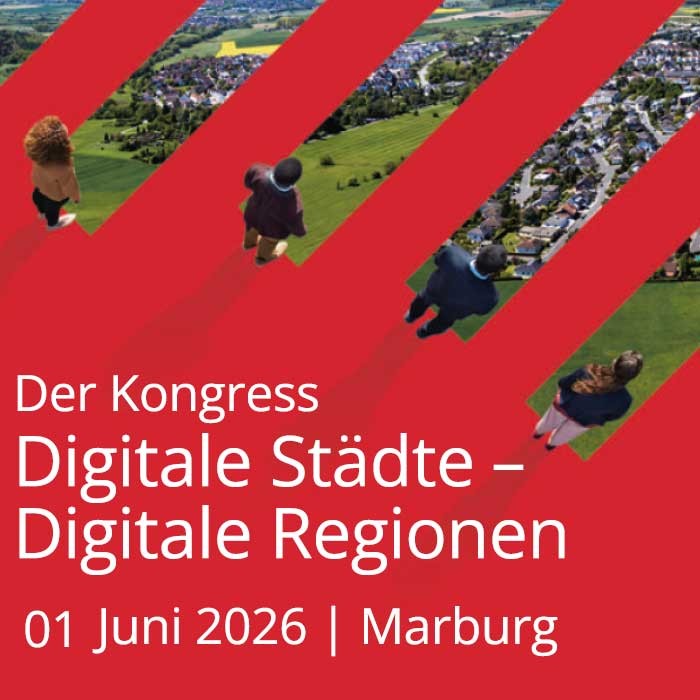
    Congress: Digitale Städte - Digitale Regionen

    We will be at the Digitale Städte - Digitale Regionen congress (Hessian Ministry for Digitalization and Innovation).
    Our software solutions + live demo of the new contract management software YOURs with integrated artificial intelligence.

    01 June 2026 | Marburg

    Learn more

    Memo Tagung 2026
    Zukunftskongress Bayern

    MEMO Tagung 2026

    We were there at the MEMO Tagung 2026.


    4./5. May 2026 | Münster

    Learn more

    Zukunftskongress Bayern

    KommDIGITALE 2026

    We were there at the KommDIGITALE 2026 congress as trade visitors.


    25./26. March 2026 | Bielefeld

    Learn more
    Digitaler Staat 2026
    Zukunftskongress Bayern

    Digitaler Staat 2026

    We were there at the congress Digitaler Staat 2026.

    3./4. March 2026 | Berlin

    Learn more
    Zukunftskongress Bayern
    Zukunftskongress Bayern

    Zukunftskongress Bayern

    We were there at the Zukunftskongress Bayern.


    5. Feb. 2026 | Munich

    Learn more

    Veranstaltungen (2025)
    • Jede Kommune nutzt dieselbe technische Plattform für E-Akten, Datenmanagement und Kommunikation.
    • Schnittstellen sind über standardisierte APIs, zum Beispiel OSCI, REST oder XML, geregelt.
    • Die Datenhaltung erfolgt dezentral, aber in einem gemeinsamen semantischen Modell, zum Beispiel nach XÖV-Standards.

    Events (2025)


    Nürnberg Kommunale

    Nürnberg Kommunale

    We were there at the Nürnberg Kommunale.


    22./23. Oct. 2025 | Nürnberg

    Learn more

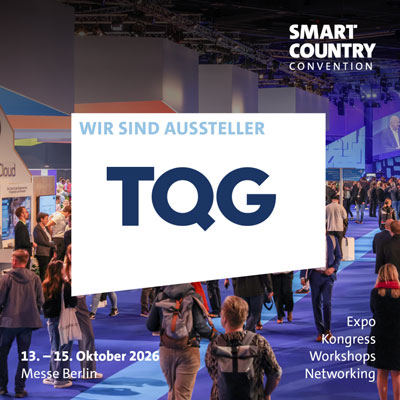
    SCC

    Smart Country Convention

    We were there at the Smart Country Convention.


    30. Sept. – 02. Oct. 2025 | Berlin

    Learn more

    KI.produktiv 2025

    KI.produktiv 2025

    We were there as trade visitors at KI.produktiv 2025.


    25. Sept 2025 | Darmstadt

    Learn more

    Messe Kommunal 2025

    Fair: Kommunal 2025

    We were at the fair Kommunal 2025.
    Our topics: Open source technology and the automation of all your contracts through artificial intelligence (AI).

    27./28. August 2025 | Göttingen

    Learn more

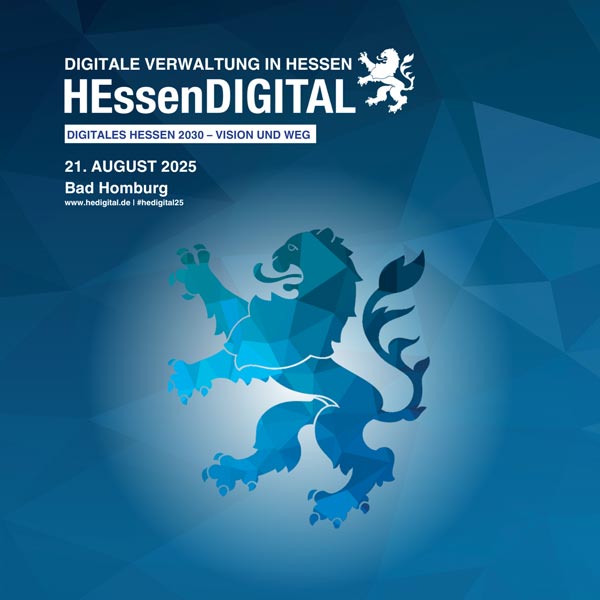
    HEssenDIGITAL

    Congress: HEssenDIGITAL

    We were at the HEssenDIGITAL.

    21 August 2025 | Bad Homburg

    Learn more

    Baden-Württemberg 4.0

    Congress: Baden-Württemberg 4.0

    We were at the Baden-Württemberg 4.0.

    03 July 2025 | Stuttgart

    Learn more

    Digitale Städte - Digitale Regionen

    Congress: Digital Cities - Digital Regions

    We were at the Digitale Städte - Digitale Regionen congress (Hessian Ministry for Digitalization and Innovation).

    26 May 2025 | Marburg

    Learn more

    e-nrw

    Congress: e-nrw.

    | Digitalization as a stabilizer of democracy

    We were at the e-nrw congress.

    14 May 2025 | Neuss

    Learn more

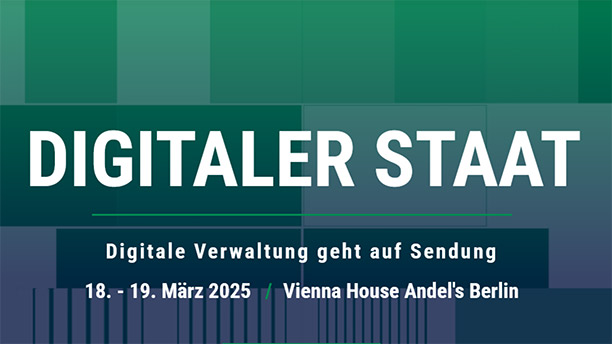
    DIGITALER STAAT

    Congress: DIGITALER STAAT

    We were at the DIGITALER STAAT congress.

    18/19 March 2025 | Berlin

    Learn more
    eSignatur in der öffentlichen Verwaltung

    eSignature in public administration

    • Simple and binding signing of documents
    • Signatures for employees in your own company and externally
    • Freely definable signing sequence
    • Automatic dispatch of the signature request


    eSignatur

    Unsere Berater und Beraterinnen der TQG