Digital Administration for the Public Sector
Current State of Digitalization in Germany
The digitalization of public administration in Germany, despite intensive efforts under the Online Access Act (OZG) and register modernization, is still characterized by fragmentation, federal complexity, and heterogeneous IT system landscapes.In particular, the municipal level is marked by a multitude of isolated solutions. Different specialized procedures, heterogeneous e-file systems, and historically evolved IT structures prevent efficient data exchange between authorities. For example, immigration offices, residents' registration offices, and passport offices within the same district are often unable to carry out direct data transfers because interface standards, security protocols, and data models are not harmonized.

Vision of a Unified and Compatible Solution for Public Administration:
In the context of register modernization and the introduction of data and contract management solutions, a unified digital ecosystem could be created with the following characteristics:
- Central Data Platform (District Cloud or Data Hub)
- Each municipality uses the same technical platform for e-files, data management, and communication.
- Interfaces are regulated via standardized APIs (e.g., OSCI, REST, XML).
- Data storage is decentralized but follows a shared semantic model (e.g., based on XÖV standards).
- Standardized Specialized Software with Modular Structure
- All municipalities within a district use the same core software (e.g., for registration services, immigration law, passport services).
- Specialized procedures access shared core registers (e.g., personal, address, and business registers).
- Automated Data Flows with AI Support
- Artificial intelligence handles tasks such as duplicate detection, data validation, and process routing (e.g., automatic forwarding of applications to the responsible authority).
- Process automation (RPA – Robotic Process Automation) provides administrative support to employees.
- Central Procurement and Governance at District Level
- Procurement is carried out centrally by the district to ensure uniform software standards, support, and training.
- Quality and administrative control are managed by a higher-level digitalization unit within the district administration, which also oversees data protection, IT security, and training.
- Digital Signature and E-File as a Binding Working Basis
- All documents and processes are managed digitally in a legally compliant and audit-proof manner.
- Digital signatures (qualified in accordance with the eIDAS Regulation) ensure legal certainty.
Customers who already fully rely on our software solutions
Vision einer einheitlichen und kompatiblen Lösung für die Verwaltung:
Im Sinne der Registermodernisierung bzw. Einführung einer Vertragsmanagementlösung könnte ein einheitliches digitales Ökosystem geschaffen werden, das folgende Merkmale aufweist:
- Zentrale Datenplattform (Landkreis-Cloud oder Data Hub)
- Jede Kommune nutzt dieselbe technische Plattform für E-Akten, Datenmanagement und Kommunikation.
- Schnittstellen sind über standardisierte APIs (z. B. OSCI, REST, XML) geregelt.
- Datenhaltung erfolgt dezentral, aber in einem gemeinsamen semantischen Modell (z. B. nach XÖV-Standards).
- Einheitliche Fachsoftware mit modularer Struktur
- Alle Kommunen eines Landkreises verwenden dieselbe Grundsoftware (z. B. für Meldewesen, Ausländerrecht, Passwesen).
- Fachverfahren greifen auf gemeinsame Kernregister zu (z. B. Personen-, Adress-, Unternehmensregister).
- Automatisierte Datenflüsse mit KI-Unterstützung
- Künstliche Intelligenz übernimmt Aufgaben wie Dublettenprüfung, Datenvalidierung und Prozessrouting (z. B. automatische Weiterleitung von Anträgen an die zuständige Stelle).
- Prozessautomatisierung (RPA – Robotic Process Automation) unterstützt die Mitarbeiterinnen und Mitarbeiter administrativ.
- Zentrale Vergabe und Steuerung auf Landkreisebene
- Ausschreibungen erfolgen über den Landkreis zentral, um gleiche Softwarestandards, Support und Schulung sicherzustellen.
- Qualitäts- und Administrationskontrolle erfolgt durch eine übergeordnete Digitalisierungsstelle im Landratsamt, die auch Datenschutz, IT-Sicherheit und Schulungen steuert.
- Digitale Signatur und e-Akte als verbindliche Arbeitsgrundlage
- Alle Dokumente und Vorgänge werden revisionssicher digital geführt.
- Digitale Signaturen (qualifiziert nach eIDAS-Verordnung) gewährleisten Rechtssicherheit.
Artificial Intelligence (AI) for Public Administration
- AI-supported contract creation, contract drafting, and documentation
- AI-supported analysis and evaluation of contract content
Software solution for the federal government, states, and local governments
TQG stands for digital sovereignty - your German solution for public administration and industry. Our software solutions are based directly on open source technology. It is therefore no longer necessary to store or pass on data via third-party providers outside the European Union. We provide you with the storage and administration of your data in the German data centre, alternatively directly on your premises.
- Software for internal and external administration
- Based on open source technology
- Data protection compliance & absolute audit security
- Hosting in a German data centre or directly on-premise at your premises
Product overview for ensuring your digital sovereignty
![]() |
Vertragsmanagement SoftwareDas Vertragsmanagementsystem smartLCM Vertragsmanagement ist die Vertragsmanagement Plattform für Dein gesamten Vertragsmanagement-Zyklus. Die smartLCM ist die individuell an genau Deine Bedürfnisse zugeschnittene Software-Lösung. smartLCM Vertragsmanagement
|
Verwaltung von EVB-IT Verträgen Mit DocumentIQ sind alle EVB-IT Verträge automatisiert und digitalisiert direkt in die Vertragssoftware übertragbar.
DocumentIQ
|
![]() |
Elektronische SignaturDie elektronische Signatur TQG Sign – Unterzeichnen Sie alle Dokumente einfach digital.
TQG Sign
|
Digital sovereignty
The TQG supports the strategy of the federal state governments and municipalities for digital sovereignty in order to be able to shape the digital ability to act autonomously, securely and independently of individual technology providers.
- Promotion of open source for transparency and independence
- Reduction of provider dependencies
- Strengthening IT security and resilience
- Flexible IT architectures for a simple, low-cost change of IT components
- Ensuring compliance with all European and German laws (GDPR, etc.)
Vision for a unified and compatible solution for administration
As part of the modernization of registries and the implementation of data and contract management solutions, a unified digital ecosystem could be created with the following features:Zentrale Datenplattform (Landkreis-Cloud oder Data Hub)
- Jede Kommune nutzt dieselbe technische Plattform für E-Akten, Datenmanagement und Kommunikation.
- Schnittstellen sind über standardisierte APIs, zum Beispiel OSCI, REST oder XML, geregelt.
- Die Datenhaltung erfolgt dezentral, aber in einem gemeinsamen semantischen Modell, zum Beispiel nach XÖV-Standards.
Einheitliche Fachsoftware mit modularer Struktur
- Alle Kommunen eines Landkreises verwenden dieselbe Grundsoftware (z. B. für Meldewesen, Ausländerrecht, Passwesen).
- Fachverfahren greifen auf gemeinsame Kernregister zu (z. B. Personen-, Adress-, Unternehmensregister).
Automatisierte Datenflüsse mit KI-Unterstützung
- Künstliche Intelligenz übernimmt Aufgaben wie Dublettenprüfung, Datenvalidierung und Prozessrouting (z. B. automatische Weiterleitung von Anträgen an die zuständige Stelle).
- Prozessautomatisierung (RPA – Robotic Process Automation) unterstützt die Mitarbeiterinnen und Mitarbeiter administrativ.
Zentrale Vergabe und Steuerung auf Landkreiseben
- Ausschreibungen erfolgen über den Landkreis zentral, um gleiche Softwarestandards, Support und Schulung sicherzustellen.
- Qualitäts- und Administrationskontrolle erfolgt durch eine übergeordnete Digitalisierungsstelle im Landratsamt, die auch Datenschutz, IT-Sicherheit und Schulungen steuert.
Digitale Signatur und e-Akte als verbindliche Arbeitsgrundlage
- Alle Dokumente und Vorgänge werden revisionssicher digital geführt.
- Digitale Signaturen (qualifiziert nach eIDAS-Verordnung) gewährleisten Rechtssicherheit.
Summary:
A unified, cross-district IT architecture for e-files and register modernization is a key step toward transparent and citizen-friendly public administration. Through shared software solutions, standardized interfaces, and centralized administrative governance, media discontinuities and interface problems can be sustainably avoided. The use of artificial intelligence (AI) for data validation and process automation actively supports public administration in its transformation into a digital authority.Events (2026)
|
|
Congress: Zukunftskongress Staat & Verwaltung
We look forward to an open exchange of ideas and inspiring discussions with stakeholders from politics, government, business, and the service sector— Together, we are shaping the digital future.
09./10. June 2026 | Berlin
Learn more
|
|
Congress: Digitale Städte - Digitale Regionen
We will be at the Digitale Städte - Digitale Regionen congress (Hessian Ministry for Digitalization and Innovation).
Our software solutions + live demo of the new contract management software YOURs with integrated artificial intelligence.
Learn more
|
|
|
|
KommDIGITALE 2026
We were there at the KommDIGITALE 2026 congress as trade visitors.
25./26. March 2026 | Bielefeld
Learn more
|
|
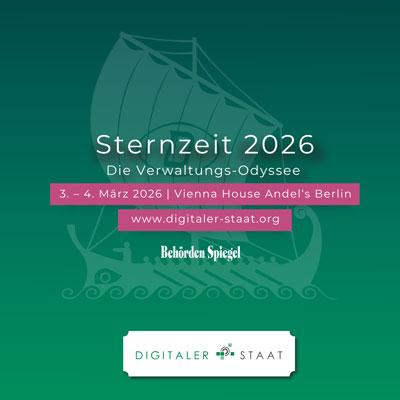
Digitaler Staat 2026
We were there at the congress Digitaler Staat 2026.
3./4. March 2026 | Berlin
Learn more
|
|
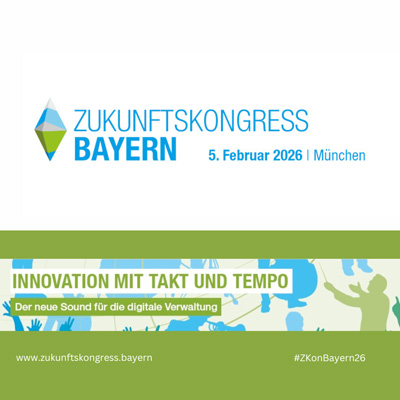
Zukunftskongress Bayern
We were there at the Zukunftskongress Bayern.
5. Feb. 2026 | Munich
Learn more
Events (2025)
|
|
Smart Country Convention
We were there at the Smart Country Convention.
30. Sept. – 02. Oct. 2025 | Berlin
Learn more
|
KI.produktiv 2025
We were there as trade visitors at KI.produktiv 2025.
25. Sept 2025 | Darmstadt
Learn more
|
Fair: Kommunal 2025
We were at the fair Kommunal 2025.
Our topics: Open source technology and the automation of all your contracts through artificial intelligence (AI).
27./28. August 2025 | Göttingen
Learn more
|
|
Congress: Baden-Württemberg 4.0
We were at the Baden-Württemberg 4.0.
03 July 2025 | Stuttgart
Learn more
|
Congress: Digital Cities - Digital Regions
We were at the Digitale Städte - Digitale Regionen congress (Hessian Ministry for Digitalization and Innovation).
Learn more
|
Congress: e-nrw.
| Digitalization as a stabilizer of democracyWe were at the e-nrw congress.
14 May 2025 | Neuss
Learn more
|
Congress: DIGITALER STAAT
We were at the DIGITALER STAAT congress.
18/19 March 2025 | Berlin