Smart Management with Enterprise Information Management
For Public Officials and Citizens
Thomas Kuckelkorn, Manager PR & Communications at BCT Deutschland GmbH
Published in: DiALOG - DAS MAGAZIN FÜR ENTERPRISE INFORMATION MANAGEMENT | MÄRZ 2017
Smarter Services for Public Officials and Citizens
BCT first introduced a document management system (DMS) to digitize and automate the municipality’s paper-based mail processing. Burgmans explains: “After the successful completion of this project, it became clear to us that we wanted to continue all further steps of our digital transformation with the same IT partner.” Following the migration of the DMS to the cloud in 2015, the municipality then implemented an Enterprise Information Management (EIM) system to optimize process-oriented workflows.
Führung wird immer wichtiger
Zweifellos, die meisten Unternehmen werden sich in den kommenden Jahren stark verändern. Neben ihren Strukturen und den Arbeitsbeziehungen in ihnen werden sich oft auch ihre Geschäftsmodelle wandeln. Doch eines wird sich nicht verändern: der Mensch Mitarbeiter. Er wird sich weiterhin Halt und Orientierung wünschen – gerade wenn im Unternehmen selbst und in dessen Umfeld scheinbar alles im Fluss ist.
Doch wer soll ihm dieses Gefühl vermitteln, wenn im Unternehmen sozusagen alles permanent auf dem Prüfstand steht? Letztlich können dies nur die Führungskräfte sein. Deshalb ist die These nicht gewagt: Führung wird künftig in den Unternehmen immer wichtiger werden – gerade weil es im Unternehmenskontext sonst nichts mehr gibt, worauf man als Mitarbeiter bauen und vertrauen kann.
Führung muss sich ändern
Soweit, so beruhigend. Das bedeutet jedoch keineswegs, dass sich Führung nicht verändert. Im Gegenteil! Die Art zu führen, muss sich im digitalen Zeitalter radikal wandeln. Denn folgende Entwicklungslinien sind in den Unternehmen unverkennbar.
- Die für den Unternehmenserfolg relevanten Leistungen werden zunehmend von bereichs- und oft sogar unternehmensübergreifenden Teams erbracht.
- Die für die Kunden erbrachten Lösungen setzen immer mehr Spezialwissen voraus, das die Führungskräfte oft selbst nicht haben.
- Die von den Unternehmen erarbeiteten Strategien, Planungen usw. haben eine immer kürzere Gültigkeitsdauer. Und:
- Die Führungskräfte und ihre Bereiche stehen immer häufiger vor Herausforderungen, für die sie noch keine Lösung haben.
Wie ist in einem solchen Umfeld erfolgreiche Führung möglich – wenn die Führungskräfte einen immer geringeren (disziplinarischen) Zugriff auf ihre Mitarbeiter haben und – salopp formuliert – auch nicht schlauer als diese sind?
Führungskräfte müssen „Marken“ werden
Nach dem klassischen Befehl- und Gehorsam-Prinzip ist dies nicht möglich; ebenso wenig dadurch, dass die Führungskräfte versuchen, sich als Alles-besser-Wisser zu profilieren. Der einzig mögliche Lösungsweg ist: Die Führungskräfte müssen sich zu echten Leadern entwickeln, also Persönlichkeitsmarken, denen die Mitarbeiter vertrauen.
Eine Marke kennzeichnen zwei Faktoren. Erstens: Sie ist aufgrund ihres Auftritts beziehungsweise Erscheinungsbilds wiedererkennbar. Und zweitens: Sie gibt den Kunden ein klares Leistungsversprechen – so wie dies zum Beispiel die Unternehmen Audi und BMW mit ihren Slogans „Vorsprung durch Technik“ beziehungsweise „Freude am Fahren“ tun.
Erkennbar für gewisse Werte stehen
Ähnlich verhält es sich mit Fühungskräften, die eine „Persönlichkeitsmarke“ sind. Auch sie stehen für ihr Umfeld erkennbar für konkrete Werte und Überzeugungen, die sich in ihrem Verhalten zeigen. Also lautet eine Anforderung an Führungskräfte, die eine Persönlichkeitsmarke werden möchten: Sie müssen sich ihrer Werte und Überzeugungen sowie Stärken bewusst werden – also darüber, was sie als Person einzigartig und unverwechselbar macht. Dazu zählt auch das Kennen der eigenen Schwächen. Denn erst aus dem Bewusstsein unserer Stärken und Schwächen erwächst das erforderliche Selbstverständnis für unsere mögliche Wirkung. Und dieses hilft uns wiederum, nicht nur an „Schönwetter-Tagen“, sondern auch, wenn es (im Unternehmen oder Markt) „stürmt und schneit“ eine souveräne Haltung einzunehmen und zu zeigen. Und dies ist wiederum ein Signal für unsere Umwelt: Dieser Marke beziehungsweise Person kannst du vertrauen.
Sich präsentieren und vermarkten
„Werden Sie als Führungskraft eine Marke und präsentieren und vermarkten Sie sich entsprechend“ – diese Aufforderung stößt bei vielen Führungskräften auf Vorbehalte. Denn mit dem Begriff „Vermarktung“ assoziieren sie Attribute wie „schrill“ und „laut“. Doch nur wenige Marken sind so schrill und laut wie Afri Cola. Weit mehr setzen auf ein unaufgeregtes Under-Statement.
Ähnlich verhält es bei der Selbst- Vermarktung von Führungskräften. Auch hier geht es nicht darum, stets am lautesten zu schreien, sondern immer wieder nach außen zu zeigen und zu artikulieren,
- wofür man steht und
- was einem als Person wichtig ist.
Denn so entstehen Glaubwürdigkeit und somit Vertrauen. Und diese Faktoren werden für den Führungserfolg in der von Veränderung geprägten VUCA-Welt immer wichtiger.
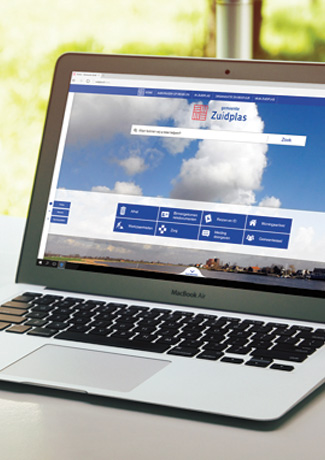
Another key advantage is that the EIM system can be continuously adapted and expanded during operation to reflect the evolving needs of the Municipality of Zuidplas. Since its implementation, the municipality has benefited from significantly improved integration of the software into its day-to-day processes. In addition, a front office was established to improve the management of permits and approvals related to municipal regulations, among other administrative tasks.
“By enabling shorter processing times for applications and consequently more efficient collaboration—both internally and externally—our Enterprise Information Management system allows us to continuously improve our services.”
Citizens only need to provide the minimum required information. All additional personal data is securely shared between the relevant departments, making it easily accessible and searchable for municipal employees. Staff have a complete overview of each citizen’s inquiries and their current processing status, enabling them to provide accurate information at any time.
Looking Ahead
“All project stakeholders shared the same vision from the very beginning: to establish digital public services in the Municipality of Zuidplas,” Burgmans explains. In the coming years, Zuidplas and BCT will continue working together on forward-looking organizational structures and user concepts to further optimize administrative processes. Among other goals, they aim to fully digitize government decision-making processes, even for increasingly complex products and public services.
www.zuidplas.nl